Water Damage Restoration · Albuquerque

Water Damage Restoration Albuquerque

Rapid emergency response, careful moisture removal, structural drying, and a clear recovery plan for homes and businesses.

✓Inspection-led response
✓Documented structural drying
✓Homes & businesses
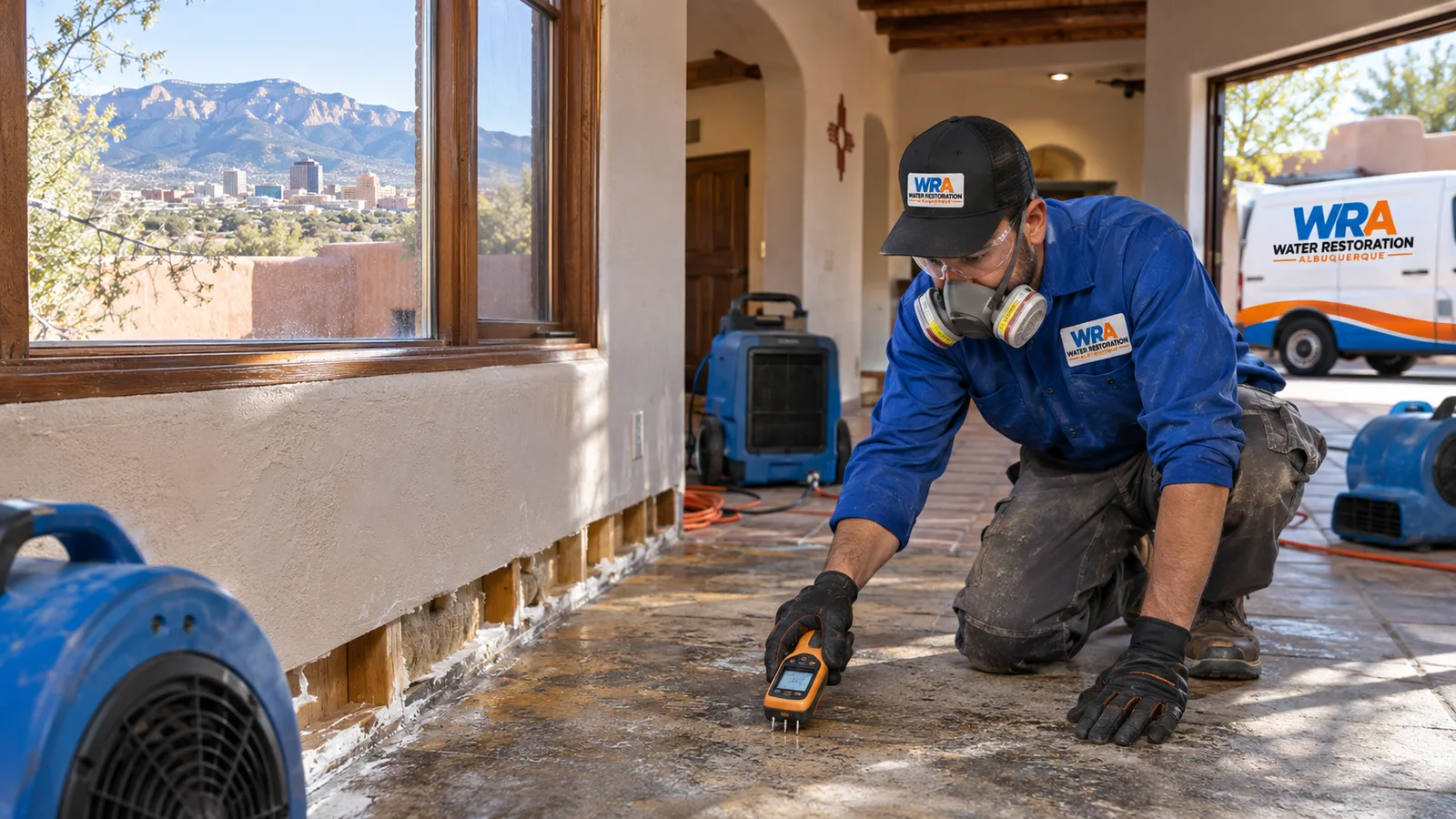
Water damage technician using a moisture meter beside recently extracted flooring in an Albuquerque home
Albuquerque Water Response

Fast Help When Water Gets Inside

Water damage restoration in Albuquerque should begin as soon as it is safe to enter the property. Water can travel under flooring, wick into drywall, soak insulation, and collect inside wall cavities long before every wet area is visible. Water Restoration Albuquerque responds with an inspection-led plan for extraction, controlled demolition when needed, structural drying, cleaning, and repair coordination.

Our water damage restoration specialists serving Albuquerque assess the source, affected materials, and extent of moisture before setting equipment. We explain what can likely be dried in place, what may need removal, and how progress will be checked. That gives property owners a practical scope instead of relying on surface appearance alone.

Albuquerque's dry outdoor air does not guarantee that an enclosed assembly will dry safely on its own. Tile, cabinets, baseboards, wall coverings, and layered flooring can trap moisture. A professional assessment uses moisture readings to identify those concealed areas and determine whether extraction, air movement, dehumidification, or material removal is appropriate.

Water Damage We Handle

Plumbing Leaks and Supply-Line Failures

A failed pipe, fixture connection, water heater, or appliance line can release a large amount of water quickly. We locate the affected area, remove standing water, and map moisture migration into adjoining materials.

Roof and Storm Intrusion

Wind-driven rain and roof leaks can wet ceilings, insulation, wall cavities, and flooring. Restoration begins after the source is controlled, with special attention to overhead materials and areas where water traveled away from the visible stain.

Sewage and Contaminated Water

Water containing sewage or other contaminants requires controlled removal, protective equipment, disposal of affected porous materials, and cleaning with methods appropriate to the contamination level.

Overflow and Drain Incidents

Overflowing tubs, sinks, toilets, and backed-up drains can affect more than one room or level. The response depends on the water source, elapsed time, and materials involved.

Commercial Water Losses

Offices, shops, multifamily properties, and other commercial spaces need a plan that accounts for occupied areas, equipment, access, and business operations while drying proceeds.

Hidden and Slow Leaks

A slow leak may create staining, odor, soft drywall, damaged trim, or deteriorated flooring. Moisture testing helps define the affected area before materials are opened or removed.

Inspect · Measure · Monitor

A Measured Approach to Drying

Effective drying is based on readings, not on how a surface feels. The initial inspection may use noninvasive moisture meters, penetrating meters, thermal imaging as a screening tool, and relative-humidity measurements. Thermal images can suggest temperature differences associated with moisture, but meter readings are needed to verify wet materials.

Restoration equipment is selected for the actual conditions. Portable or truck-mounted extraction removes bulk water. Air movers increase evaporation across wet surfaces, while dehumidifiers collect moisture from the air. Containment may be used to isolate a work area, and air filtration can help manage airborne particles during demolition or cleaning.

Drying progress is documented over time. Readings from affected materials are compared with dry reference materials in an unaffected area when possible. Equipment may be repositioned as conditions change. It is removed when the drying goal has been reached, not simply after a preset number of days.

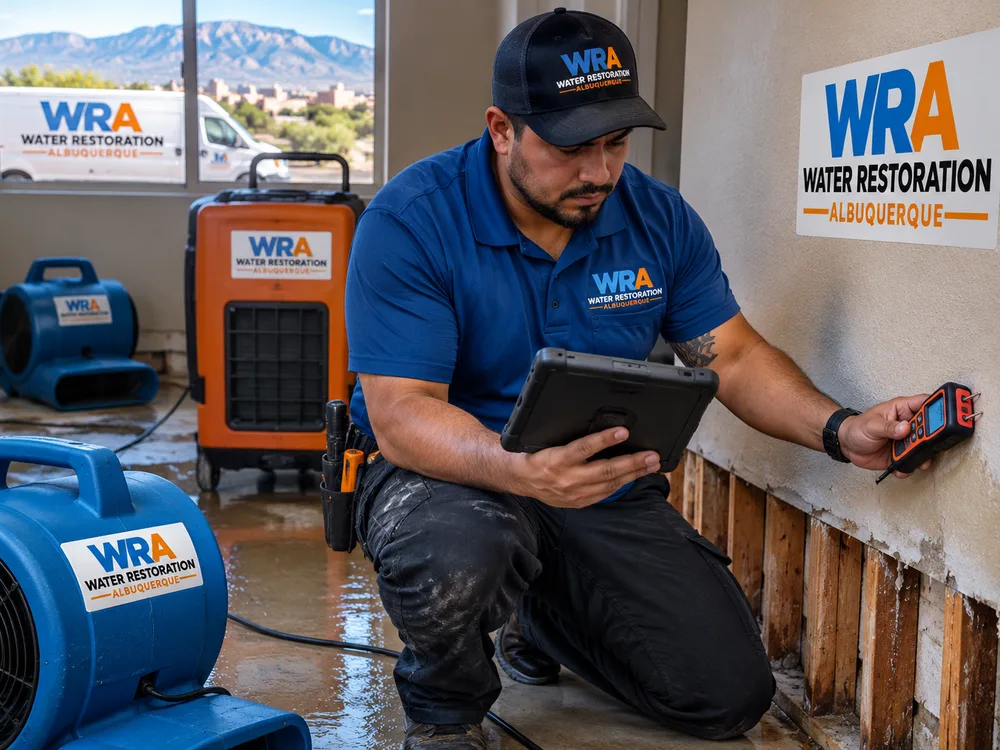
Technician documenting moisture readings while air movers and a dehumidifier dry an affected room
Moisture readings guide equipment placement and drying decisions.
Extract · Dry · Restore

Our Water Damage Restoration Process

A documented sequence connects immediate damage control with measured drying, cleaning, and repairs.

01

Emergency Assessment and Safety Review

We identify the apparent water source, check for hazards, and determine which rooms and materials are affected. Electrical risks, sagging ceilings, contaminated water, and unstable materials must be addressed before normal access resumes.

02

Water Extraction and Damage Control

Standing water is extracted, contents may be moved or protected, and practical steps are taken to limit migration. If a pipe or building defect caused the loss, that source must be stopped before dependable drying can continue.

03

Moisture Mapping and Removal Decisions

We trace moisture through floors, walls, ceilings, cabinets, and other assemblies. Materials that cannot be cleaned or dried safely may require controlled removal, while sound materials may remain in place under a monitored drying plan.

04

Structural Drying and Monitoring

Air movers, dehumidifiers, and containment are arranged for the affected space. Temperature, humidity, and material moisture are checked during follow-up visits so the setup can be adjusted.

05

Cleaning and Repairs

Affected surfaces are cleaned according to the water category and material. Once drying is complete, removed drywall, insulation, trim, flooring, paint, or other finishes can be restored under an agreed repair scope.

Local Scope Planning

Water Damage Restoration Albuquerque Property Owners Can Understand

Every loss has a different path. In older neighborhoods such as Barelas and Huning Highland, restoration may involve plaster, wood flooring, or other assemblies that require careful testing before removal decisions are made. In foothill-area homes with multiple levels, water released upstairs can travel through floor systems and appear at ceiling penetrations below. Nob Hill businesses may also need work phased around customer access, shared walls, and operating hours.

Seasonal thunderstorms can produce sudden roof or exterior water intrusion, while freezing weather can place exposed or poorly protected plumbing at risk. The response should follow the source and construction of the building rather than assuming that all Albuquerque properties dry the same way.

Water losses are commonly evaluated by water category and class. Category describes contamination, while class relates to the amount of water and the materials affected. These classifications help determine cleaning, removal, containment, and drying methods. Conditions can worsen when water remains in contact with materials, so prompt assessment matters even when the initial spill looks limited.

For insurance-related losses, useful records may include photographs, moisture readings, equipment logs, affected-material notes, and an itemized scope. Coverage decisions belong to the insurer, and property owners should report a loss according to their policy requirements. We can provide restoration documentation without promising that a particular item will be covered.
What Can Be Saved After Water Damage?

The answer depends on the source of the water, how long the material stayed wet, and whether it can be cleaned and dried thoroughly. Nonporous materials often respond well to cleaning. Some wood framing, subfloors, and hardwood may be candidates for controlled drying when they remain structurally sound and the water source permits it.

Porous materials require closer review. Saturated insulation, swollen composite cabinetry, delaminated flooring, and contaminated carpet pad may need removal. Drywall can sometimes be dried in place after a clean-water loss, but trapped insulation, extensive saturation, deterioration, or contamination can change that decision.

Visible mold growth or persistent odor calls for a more specific assessment. Applying paint or fragrance does not correct moisture inside an assembly. The underlying wet material must be found, dried, cleaned, or removed before finishes are replaced.

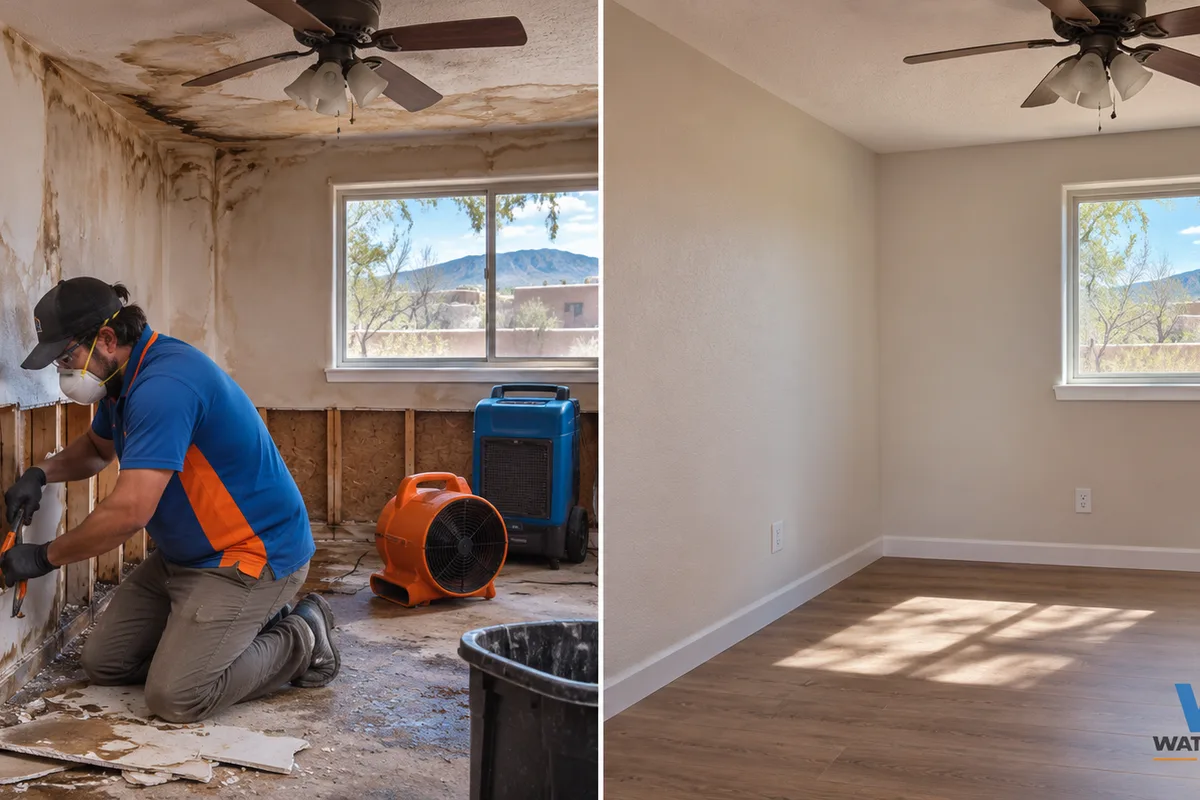
Water-damaged room during controlled material removal and the same room after drying and finish repairs
Removal is limited to materials that cannot be safely dried or retained.

How Much Does Water Damage Restoration Cost in Albuquerque?

Water damage restoration in Albuquerque typically ranges from $1,200 to $6,000 for a contained residential loss, while extensive contamination, demolition, or reconstruction can exceed $10,000. Small extraction and drying jobs may fall below that range.

Price changes with the affected area, water category, materials, access, equipment needs, drying time, and repairs. Emergency timing and work inside walls or between floors can also affect labor. General ranges are nonbinding; the exact cost is confirmed after an on-site inspection and written scope.

Water continues moving through porous materials after the visible source stops. Arrange an assessment promptly to identify hidden moisture and start a documented recovery plan.

Call for Emergency Help
Common Questions

Water Damage Restoration Questions

How quickly can water damage restoration begin in Albuquerque?

Emergency assessment should begin as soon as the property is safe and access is available. Active plumbing must be shut off or repaired, and electrical hazards may require attention first. Albuquerque storms can create multiple simultaneous losses, so describe standing water, contamination, affected levels, and any safety concerns when requesting service.

How long does structural drying usually take?

Many contained losses require several days of monitored drying, but the actual timeline depends on saturation, materials, airflow, humidity, and concealed moisture. Dense materials and enclosed wall or floor assemblies may take longer. Moisture readings, rather than a fixed schedule, determine when equipment can be removed.

Should I contact my insurance company before restoration starts?

Report the loss promptly under your policy, but do not delay reasonable emergency steps needed to protect people and limit further damage. Photograph visible conditions when it is safe, keep receipts, and ask the insurer about deductibles, coverage, and documentation requirements. The insurer determines coverage; the restoration scope addresses the physical damage.

Can you dry walls and floors without removing them?

Some walls and floors can be dried in place when the water is sufficiently clean, materials remain sound, and equipment can move moisture out of the assembly. Removal may be necessary when contamination, trapped insulation, swelling, delamination, or inaccessible moisture prevents safe drying. Meter readings guide that decision.

Is it safe to stay in the property during restoration?

Occupancy depends on electrical safety, contamination, structural conditions, noise, heat, access, and the location of containment and equipment. A small clean-water loss isolated to one room may allow partial occupancy. Sewage, widespread demolition, unsafe ceilings, or major electrical concerns may require occupants to stay out of affected areas.

Do you handle sewage backups as water damage restoration?

Yes, sewage losses can be handled with procedures suited to contaminated water. Work may include containment, extraction, removal of affected porous materials, cleaning, and controlled drying. Avoid direct contact with the water and keep children and pets away from the affected area.

Will restoration remove mold after a water loss?

Drying the structure corrects the moisture condition that supports growth, while visible mold may require containment and material-specific cleaning or removal. The scope depends on the extent, affected materials, and occupancy concerns. Albuquerque's dry climate does not prevent growth inside a wet wall, cabinet, or floor assembly.

What should I do while waiting for the restoration team?

Stop the water source if you can do so safely, avoid wet electrical devices, keep people away from sagging ceilings, and do not enter sewage-contaminated areas. Move small valuables only when conditions are safe. Take photographs, note when the loss was discovered, and avoid using household fans if contamination or suspected mold is present.

Start the Recovery Before Hidden Moisture Spreads

Tell Water Restoration Albuquerque what happened, which areas are affected, and whether water is still entering the property. We will outline the next steps for inspection, extraction, drying, and repairs.