Emergency Water Extraction
Standing water is removed with pumps and extractors selected for the depth, flooring, and access conditions. Faster extraction reduces the amount of water that porous materials absorb.
Serving Albuquerque, New Mexico & surrounding areas
24/7 Emergency Response
Rapid assessment, water removal, controlled drying, and repairs for homes and businesses affected by leaks, appliance failures, or stormwater.
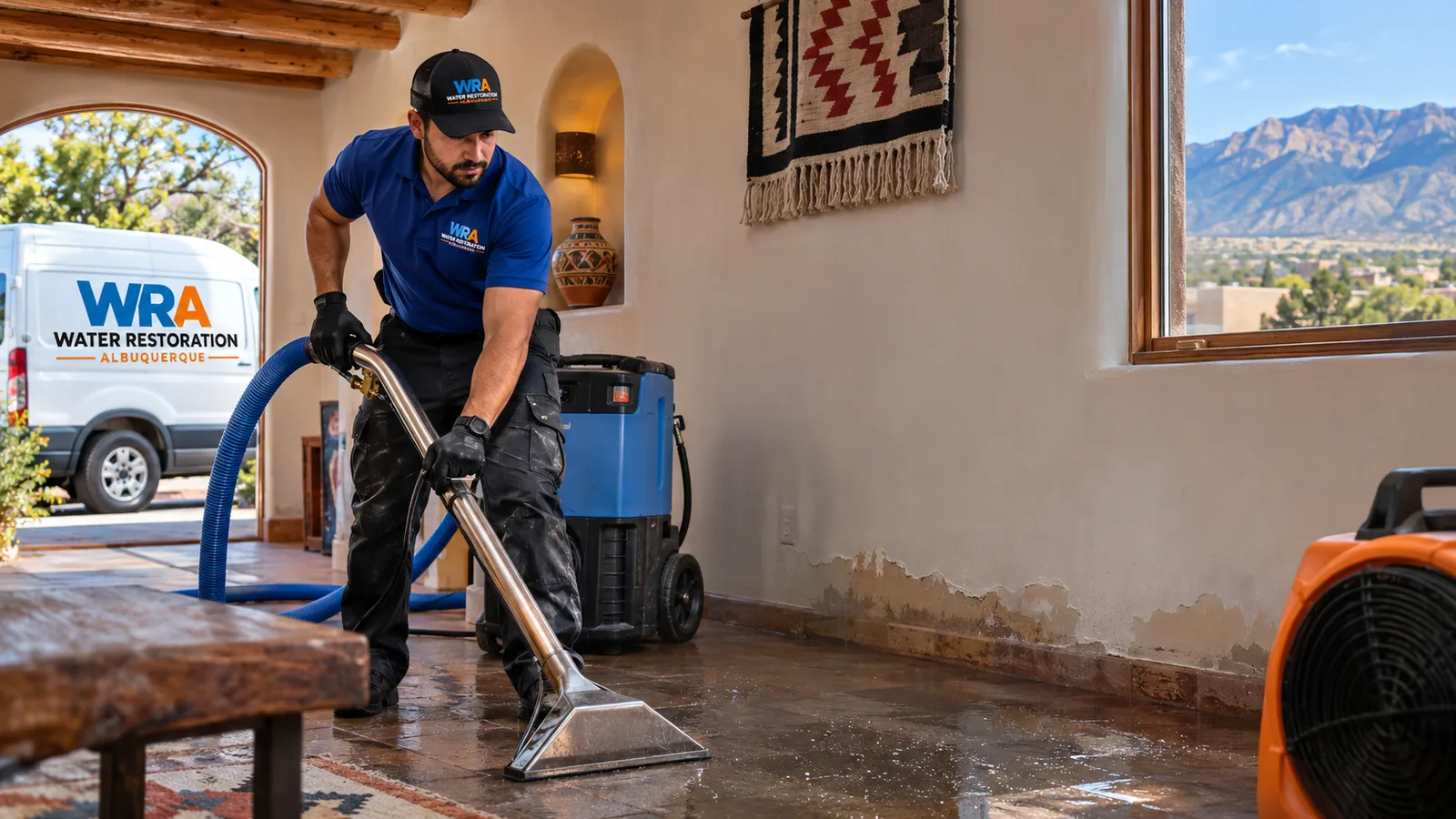
When water enters a building, the first priorities are stopping the source when safe, protecting occupants, and limiting how far moisture travels. Water damage Albuquerque NM cleanup requires more than removing visible water. Drywall, insulation, cabinets, subfloors, and wall cavities can retain moisture after the surface looks dry.
Water Restoration Albuquerque assesses affected materials, removes standing water, and builds a drying plan around measured moisture levels. Using commercial extraction equipment, air movers, dehumidifiers, and moisture meters, Albuquerque's local water damage restoration service handles the work without relying on appearance alone. The goal is to preserve sound materials where practical and identify what cannot be dried safely.
Albuquerque's dry outdoor air does not guarantee that a wet building will dry correctly. Evaporation can move moisture into enclosed cavities, while evaporative cooling systems, monsoon rainfall, roof drainage problems, and plumbing failures create different patterns of damage. Controlled airflow and dehumidification help prevent moisture from simply shifting into another part of the structure.
Standing water is removed with pumps and extractors selected for the depth, flooring, and access conditions. Faster extraction reduces the amount of water that porous materials absorb.
Air movers and dehumidifiers are positioned according to the affected area and material type. Moisture readings guide equipment placement and show whether drying is progressing.
Pin and pinless meters help locate moisture in drywall, wood, cabinets, and flooring. Thermal imaging may help identify temperature differences, but meter readings are used to verify wet materials.
Affected surfaces are cleaned according to the water source and material condition. Work methods change when water contains sewage, outdoor runoff, or other contamination.
Wet insulation, swollen composite materials, contaminated porous finishes, and damaged drywall may need controlled removal so concealed areas can be cleaned and dried.
After drying is documented, repair work can address removed drywall, baseboards, flooring, paint, and other finishes included in the agreed scope.
A supply-line break usually starts with cleaner water than a sewer backup, but the condition can worsen as water passes through building materials or remains in place. Restoration professionals commonly classify water by contamination and assess material porosity, exposure time, and whether moisture has entered concealed spaces. These factors determine what can be cleaned, what can be dried, and what should be removed.
Building type matters across Albuquerque. Older homes in neighborhoods such as Barelas may have layered flooring, plaster finishes, or previous repairs that hide moisture paths. Nob Hill properties often include a mix of older houses and commercial spaces where water can travel beneath built-in cabinets or finished floors. Foothills homes may have multiple levels, so an upstairs leak can affect wall cavities and ceilings on the floor beneath. In the North Valley, larger lots and varied building additions can make source tracing and access more involved.
Commercial losses require attention to occupancy, equipment, inventory, and safe access. Work can often be phased to isolate the affected area, but the drying plan still depends on moisture readings and the source of the water.
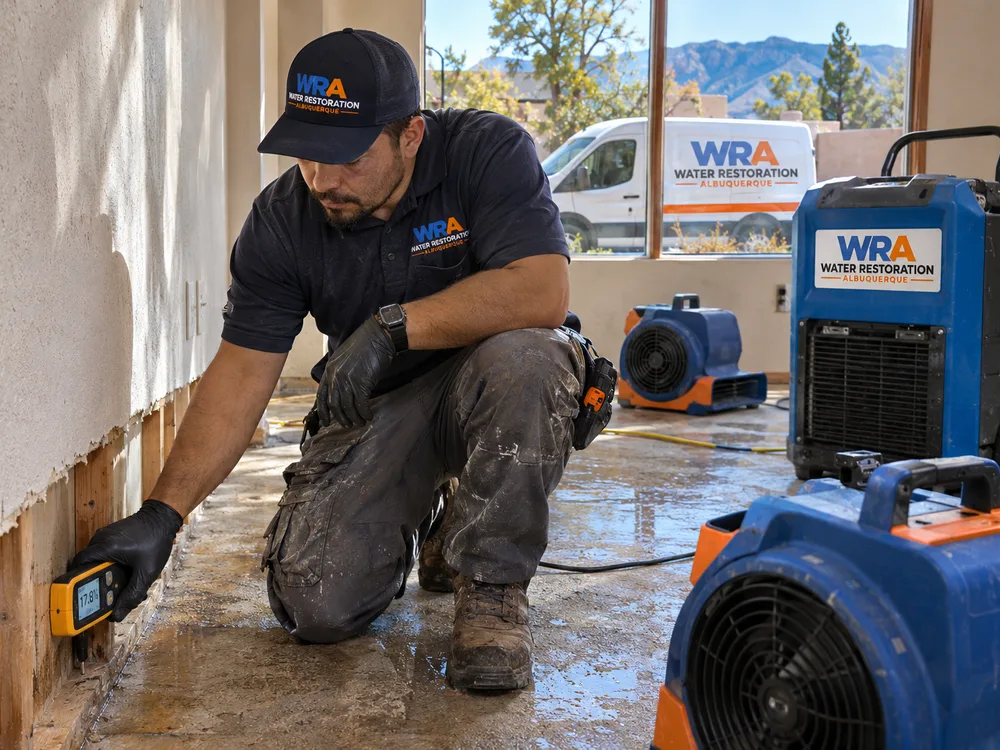
A measured sequence connects safety, extraction, material decisions, drying, cleaning, and repair from the first assessment through completion.
The first assessment checks for active leaks, electrical concerns, sagging materials, contaminated water, and other immediate hazards. A plumber, roofer, utility, or other qualified trade may need to correct the source before restoration proceeds.
The team maps visible and concealed moisture, records affected rooms and materials, and determines the likely water category. Photos and readings help support the work plan and may assist with an insurance claim.
Portable or truck-mounted extraction equipment removes bulk water. Carpet and pad, hard flooring, and confined areas require different tools and techniques.
Materials that are contaminated, structurally damaged, or unable to dry in place are removed as needed. This can expose wet framing and cavities that would otherwise remain trapped.
Air movement and dehumidification are adjusted as conditions change. Monitoring compares material readings over time rather than treating a dry-looking surface as proof that the work is complete.
Affected areas are cleaned, final moisture conditions are checked, and the repair scope is confirmed. Reconstruction begins after the structure has reached an appropriate dry standard for the materials involved.
Protect people first. Avoid rooms with sagging ceilings, wet electrical components, sewage, or water near energized outlets and appliances. If the source is a plumbing leak and the shutoff is accessible without entering a hazardous area, stop the flow. Do not use a household vacuum to collect water.
Move valuables only when the route is safe. Place furniture legs on foil or plastic to reduce staining, and avoid lifting wet carpet or disturbing materials that may contain contaminants. Take photos of the source and affected rooms if doing so will not delay urgent action. Keep damaged items until the insurer advises whether they need inspection, unless they present a health or safety concern.
For leaks involving Albuquerque Bernalillo County Water Utility Authority service lines or meters, the utility may need to address the public-side issue. Interior plumbing, appliance connections, roof openings, and private irrigation components generally require the appropriate property-side trade. Restoration work focuses on the resulting water and material damage.
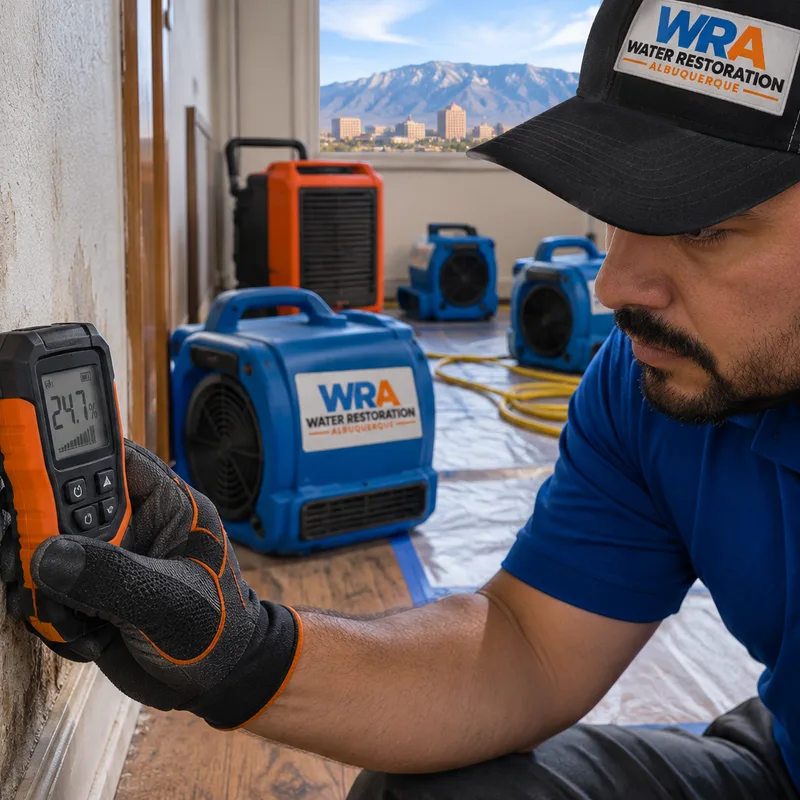
There is no single equipment count or drying time that fits every loss. Concrete slabs, wood subfloors, gypsum board, plaster, insulation, and engineered flooring release moisture at different rates. Cabinets and wall assemblies can also restrict airflow. The right setup is based on the size of the affected area, the materials present, indoor conditions, and moisture measurements.
Drying records commonly include an initial moisture map and follow-up readings from representative materials. Air movers promote evaporation at wet surfaces. Dehumidifiers collect moisture from the air so evaporation can continue. Containment may be used to concentrate drying or separate a contaminated work area from occupied rooms.
Water damage is also different from mold remediation. Wet materials should be addressed promptly because extended moisture supports microbial growth, but visible growth, odor, or known long-term leakage may require a separate assessment and work controls. Water Restoration Albuquerque will explain the observed conditions, the proposed removal boundaries, and the drying plan before major work proceeds.
Prompt assessment can limit migration into adjacent rooms and concealed cavities. Describe what happened, where the water traveled, and whether the source has been stopped so the next steps can be planned.
Call for Emergency HelpResponse timing depends on crew availability, access, and whether the property is safe to enter, but active water damage should be assessed as soon as practical. Monsoon storms can create several losses across Albuquerque at once, while a plumbing break may remain limited to one building. Share the source, affected rooms, water depth, and any electrical or sewage concerns when requesting service.
Structural drying often takes several days, but the actual period is set by material readings and site conditions rather than a fixed deadline. Albuquerque's low outdoor humidity may help under suitable conditions, yet trapped water beneath flooring or inside insulated walls can take longer. Daily or scheduled monitoring shows whether equipment needs to be moved, added, or removed.
Coverage depends on the policy, the cause of the loss, and whether the damage was sudden or developed over time. A sudden appliance supply-line failure may be treated differently from long-term seepage, poor maintenance, flooding, or sewer backup. Document the condition, protect the property from further damage when safe, and ask the insurer about deductibles, exclusions, and claim requirements.
Some wet materials can be dried in place, while contaminated, swollen, delaminated, or structurally damaged materials often require removal. Clean-water exposure may allow more salvage options than sewage or storm runoff. The decision also depends on how long the material remained wet, whether air can reach it, and whether moisture is trapped against Albuquerque homes' slab or wood subfloor assemblies.
The cost varies widely because a small extraction and drying job is very different from a multiroom loss requiring demolition and repairs. Price drivers include water category, affected square footage, flooring type, wall-cavity moisture, equipment duration, disposal, access, and reconstruction. An inspection is needed to provide a written scope based on the actual damage.
Relocation may be recommended when there is sewage, extensive demolition, electrical risk, loss of essential rooms, or equipment noise and heat that make occupancy impractical. A contained clean-water loss may allow parts of the property to remain occupied. The decision should account for children, pets, respiratory sensitivity, safe entry routes, and the conditions documented during the Albuquerque property assessment.
The responsible trade should correct the source before or alongside restoration work. A licensed plumber may handle a failed pipe or appliance connection, while roof damage may require a roofer and public-side water service issues may involve the Albuquerque Bernalillo County Water Utility Authority. The restoration scope addresses extraction, damaged materials, drying, cleaning, and agreed repairs.
Tell Water Restoration Albuquerque what caused the loss and which areas are affected. We will help establish the immediate priorities, inspection needs, and practical next steps for cleanup and drying.