Visible Growth
Discoloration or textured growth on drywall, trim, framing, ceilings, or stored materials warrants evaluation, especially when the area has been wet.
Serving Albuquerque, New Mexico & surrounding areas
24/7 Emergency Response
Contain the affected area, remove contaminated materials, and correct the moisture source with a clear plan for your home or business.
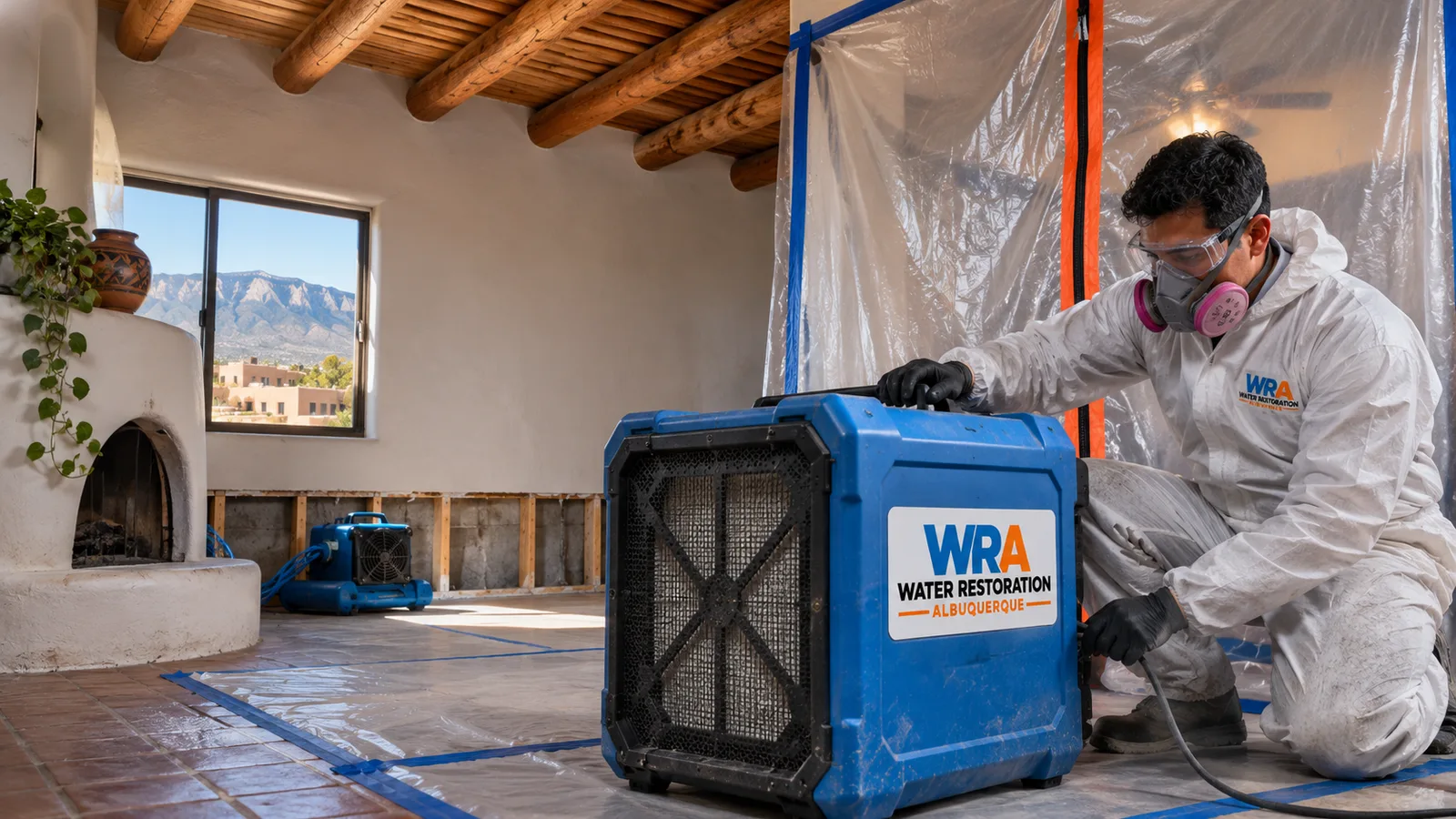
Professional mold remediation in Albuquerque begins by finding the moisture that allowed growth to develop. A roof leak, failed supply line, drainage problem, evaporative cooler leak, or poorly ventilated room can wet drywall, insulation, wood, or flooring. Cleaning the visible surface without correcting that condition often leaves the underlying problem unresolved.
Water Restoration Albuquerque evaluates the affected materials, establishes an appropriate work area, and explains what can be cleaned and what should be removed. As an experienced water damage restoration team in Albuquerque, we understand that mold and trapped moisture often need to be addressed together rather than treated as separate problems.
Albuquerque's dry climate does not make buildings immune to mold. Growth needs moisture, and that moisture may be concentrated inside a wall cavity, beneath flooring, around a leaking fixture, or near a cooling system. Summer monsoon storms can expose roof and drainage defects, while freezing weather can contribute to pipe failures. Fast drying after either event helps limit the affected area.
The scope depends on where the growth is located, how far moisture traveled, and whether the affected material is porous. Drywall, ceiling tile, carpet pad, and insulation may require removal when contamination has penetrated the material. Sound framing and other semi-porous or nonporous surfaces may be cleaned with methods suited to their condition.
Containment uses polyethylene barriers and controlled airflow to reduce the movement of dust and spores into occupied rooms. HEPA-filtered air scrubbers capture airborne particles within the work area. Technicians may use HEPA vacuums, damp wiping, and careful material removal rather than relying on spraying or fogging alone.
A proper scope also accounts for hidden moisture. Moisture meters and, when useful, thermal imaging can help identify damp areas that deserve closer investigation. Thermal imaging shows temperature differences, not mold, so readings must be interpreted and confirmed rather than treated as proof by themselves.
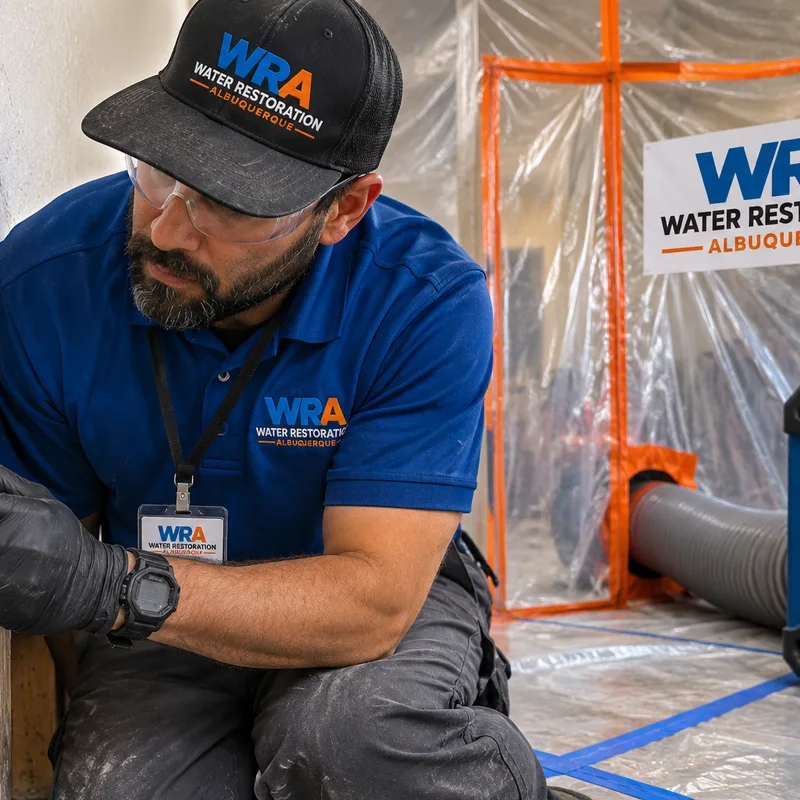
Discoloration or textured growth on drywall, trim, framing, ceilings, or stored materials warrants evaluation, especially when the area has been wet.
An odor that returns after cleaning may point to damp material inside a cabinet, wall, ceiling, flooring assembly, or HVAC-adjacent space.
Leaks, overflows, storm entry, or appliance failures can wet materials beyond the visible stain. The drying history helps determine the next step.
Repeated staining, bubbling paint, softened drywall, or warped baseboards can indicate that the moisture source remains active.
Closed buildings may conceal plumbing leaks or cooling-related moisture for longer periods, allowing damage to spread before anyone notices.
Health concerns should be discussed with a qualified medical professional. A building assessment can separately identify moisture and visible contamination.
A defined sequence keeps containment, material handling, moisture correction, and completion criteria connected from the first inspection through repairs.
We review visible conditions, the water-loss history, odors, material damage, and likely moisture pathways. The initial findings define whether limited removal or a broader investigation is appropriate.
The scope identifies containment boundaries, materials expected to remain, materials likely to be removed, cleaning methods, drying needs, and access considerations. If independent testing or a written protocol is appropriate, it can be arranged before work begins.
Polyethylene barriers, sealed openings, and negative air pressure may be used to separate the affected area. HVAC registers within the work zone may be covered so debris is not distributed through the system.
Contaminated porous materials are removed carefully and bagged for disposal. Remaining surfaces are HEPA vacuumed and cleaned using methods appropriate for the material and condition.
The underlying moisture source must be repaired or controlled. Drying equipment may be used as needed, and moisture readings help determine whether materials have reached an acceptable dry condition.
After remediation and any required clearance assessment, the cleaned area can move toward reconstruction. Clearance testing, when requested or specified, should be performed by an independent qualified professional.
Albuquerque properties vary widely in age and construction. Nob Hill includes older homes where plaster, layered finishes, and previous repairs can complicate access to a concealed leak. The North Valley has many properties with additions and varied rooflines, so moisture paths may cross more than one building assembly. Downtown and Barelas include older residential and commercial buildings where pipe chases, shared walls, or limited access can affect containment planning.
Foothills properties may have roof and wall penetrations exposed to wind-driven rain during storms. On the West Side, newer construction can still develop mold after a plumbing failure if moisture remains trapped behind baseboards, cabinets, or finished walls. These differences matter because remediation should follow the building assembly and moisture path rather than a preset package.
Commercial work also requires attention to occupants, operating hours, shared ventilation, inventory, and safe access. The plan may divide work into phases to keep unaffected areas usable while maintaining containment.
Mold remediation in Albuquerque typically costs about $750 to $6,000, while extensive contamination, difficult access, or major material removal can exceed that range. A small contained area may fall near the lower end; work across several rooms or inside wall and ceiling cavities costs more.
Final pricing depends on affected square footage, containment needs, material disposal, access, drying time, independent testing, and reconstruction. Plumbing, roofing, or HVAC repairs are often separate. The exact cost is confirmed after an on-site inspection and written scope.
Mold testing can help when the source is unclear, occupants have specific concerns, documentation is needed, or the extent of contamination is disputed. Visible growth paired with a known moisture source does not always require sampling before remediation. If samples are needed, an independent indoor environmental professional can develop a protocol and provide objective post-remediation clearance.
Bleach is not a complete answer for contaminated porous materials. It may alter the appearance of surface growth while leaving affected drywall paper, insulation, or carpet pad in place. Painting over growth also conceals the condition without removing damaged material or correcting moisture.
The right response is based on the material and extent of contamination. Small surface conditions on cleanable materials may need limited work. Widespread growth, contamination inside cavities, sewage-related water, or affected HVAC components calls for tighter controls and a more detailed scope. Water Restoration Albuquerque will explain those distinctions before work starts.
Address the moisture source and contaminated materials before repairs hide the problem. Arrange an inspection for a written scope based on the actual conditions.
Call for Emergency HelpThe first priority is to stop the water source and begin controlled drying as soon as access and safety allow. Albuquerque storm entry, plumbing failures, and evaporative cooler leaks can wet concealed materials, so an early moisture assessment may reduce the amount that must be removed. Remediation timing depends on inspection findings, containment needs, and whether independent sampling is required.
A small contained project may take a few working days, while extensive removal and structural drying can take a week or longer. Drying time depends on the materials, depth of wetting, airflow, temperature, and whether the moisture source has been fully corrected. Repairs and independent clearance testing can add time after remediation work is complete.
Temporary relocation is not required for every project, but it may be advisable when the affected area is large, critical rooms are unusable, or occupants have health sensitivities. Containment can often isolate a limited work area. The decision should consider access routes, HVAC configuration, household needs, and guidance from a medical professional when health concerns exist.
Drywall generally requires removal when growth has penetrated its paper facing, the gypsum has deteriorated, or contamination is present on a concealed side. Limited surface conditions may be handled differently after the moisture source is corrected. An on-site inspection determines whether the material is sound and cleanable.
Coverage often depends on the cause of the moisture and the terms, limits, and exclusions in the policy. A sudden covered plumbing loss may be treated differently from long-term seepage, deferred maintenance, groundwater, or a roof problem. Photograph conditions, preserve relevant records, and ask the insurer whether an inspection is required before material removal.
Post-remediation testing is useful when a protocol requires it, documentation is important, or the property owner wants independent confirmation before reconstruction. A qualified third party should perform clearance assessment when independence matters. Visual cleanliness, removal of contaminated material, correction of the moisture source, and acceptable moisture readings remain basic completion criteria.
Occupied commercial buildings can often be remediated in phases when containment, ventilation, access, and work hours are planned carefully. Shared HVAC systems and customer or employee routes need specific attention. The feasibility depends on the affected area, building use, contamination level, and whether safe separation can be maintained.
Tell Water Restoration Albuquerque what you have noticed and when the moisture problem began. We will assess the conditions, explain the likely scope, and identify the next practical step.