Moisture Investigation
The inspection looks for the water source and maps damp materials. Removal without correcting the leak or condensation problem allows growth to return.
Serving Albuquerque, New Mexico & surrounding areas
24/7 Emergency Response
Find the moisture source, contain affected areas, remove contaminated materials safely, and restore a cleaner indoor space.
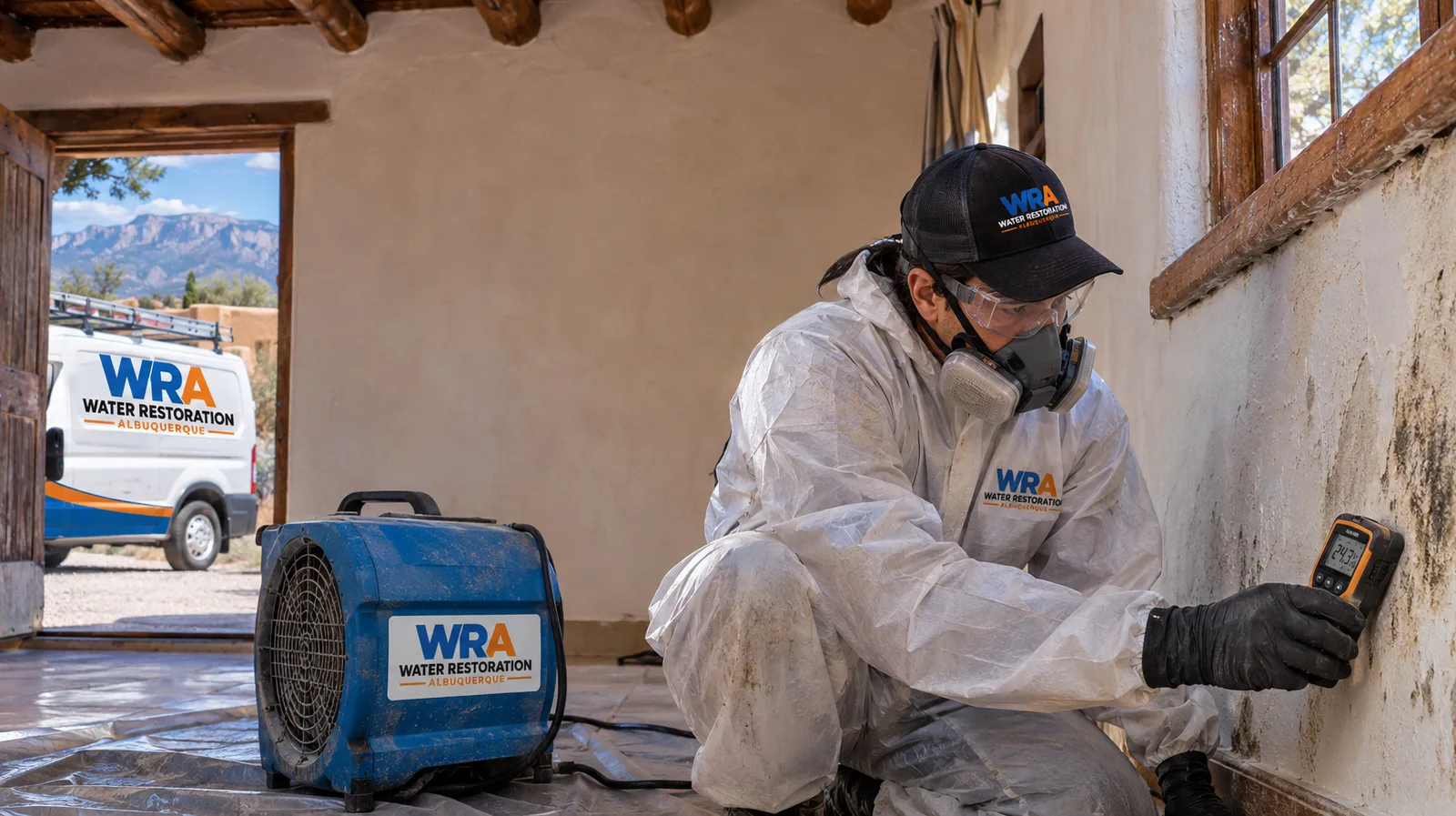
Effective mold removal in Albuquerque begins with moisture, not stains. Mold can grow after a plumbing leak, roof intrusion, appliance failure, drainage problem, or indoor condensation. Painting over discoloration or spraying the surface does not address growth inside drywall, cabinets, insulation, or wall cavities.
Water Restoration Albuquerque evaluates visible damage, checks nearby materials for moisture, and develops a removal plan based on the affected area and material type. Throughout the process, Albuquerque's trusted water damage restoration team uses controlled work practices to limit disturbance and address the conditions supporting growth. The goal is to remove affected porous material when necessary, clean salvageable surfaces, and leave the work area ready for repair.
Albuquerque's dry climate can make wet materials appear resolved before concealed moisture has fully dissipated. Evaporative coolers, roof penetrations, supply lines, and slow plumbing leaks can introduce moisture into enclosed spaces. Early assessment helps limit further material damage and clarifies whether the issue is isolated or extends beyond the visible spot.
Visible spotting is one reason to investigate, but it is not the only one. A persistent musty odor, swollen baseboards, peeling paint, soft drywall, recurring discoloration, or damp cabinets can point to hidden moisture and microbial growth. Symptoms that return after cleaning deserve closer attention because the underlying moisture source may still be active.
Location affects how an inspection is approached. Older homes near Downtown may have layered wall finishes or prior repairs that conceal the path of a leak. In the North Valley, properties with irrigation and mature landscaping may need careful evaluation around exterior walls and crawl spaces. Foothills homes exposed to wind-driven rain may require checks around roof and wall penetrations. These conditions do not prove mold is present, but they help determine where moisture readings and visual inspection should begin.
A professional assessment may use a noninvasive moisture meter, thermal imaging as a screening aid, and targeted access when conditions support it. Thermal images do not identify mold by themselves. They show temperature differences that may help locate areas requiring direct moisture testing.
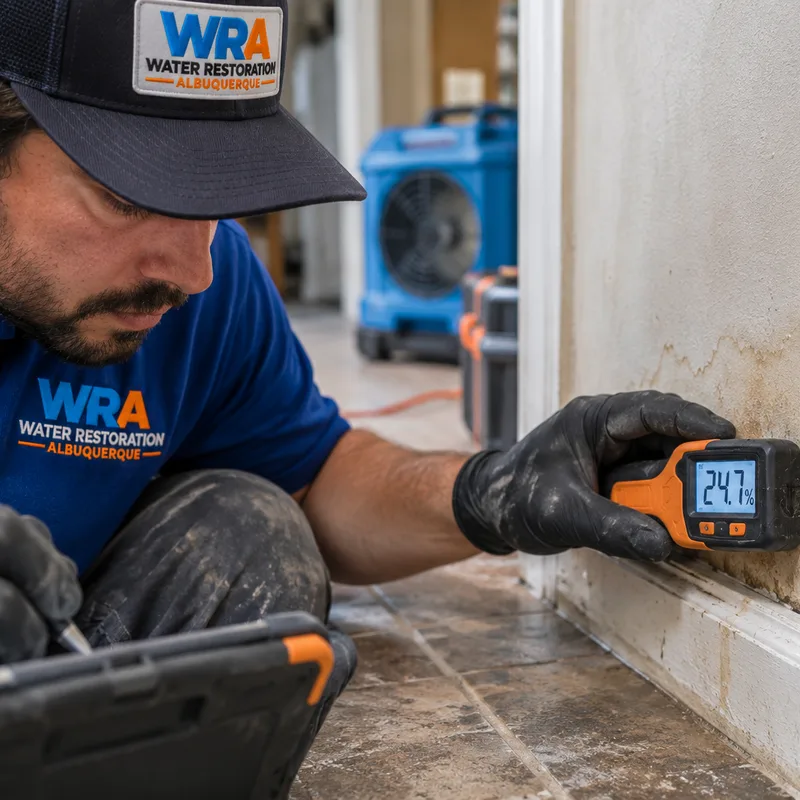
The inspection looks for the water source and maps damp materials. Removal without correcting the leak or condensation problem allows growth to return.
Polyethylene barriers and controlled access separate the work area. Negative air pressure and HEPA-filtered air scrubbers may be used when the scope calls for them.
Porous materials such as drywall, insulation, and carpet pad may need removal when contamination cannot be cleaned adequately. Sound framing can often be cleaned and dried.
HEPA vacuuming and damp wiping remove settled particles from appropriate surfaces. Work methods are selected to avoid spreading dust into unaffected rooms.
Moisture readings guide drying and help confirm that building materials have reached an appropriate condition before repairs conceal the area.
Once remediation is complete, the removed finishes can be replaced. The repair scope should address access openings, drywall, insulation, trim, and coatings as applicable.
A defined sequence connects moisture correction, containment, removal, cleaning, drying, and verification.
We review the history of the moisture event, inspect visible conditions, take moisture readings, and identify materials that may require removal or cleaning.
Active leaks or water entry must be corrected before remediation can succeed. If another trade is needed for a roof, plumbing, or drainage repair, that work is coordinated before affected finishes are closed.
The work zone is isolated based on its size and location. Protective equipment, barriers, HEPA filtration, and controlled debris handling are used as required by the scope.
Unsuitable porous materials are removed using methods intended to limit dust. Remaining surfaces are HEPA vacuumed and cleaned with products appropriate for the material.
Exposed materials are dried, and moisture conditions are checked before containment is removed or reconstruction begins. Independent post-remediation testing can be arranged when a project requires third-party verification.
Small discolorations on a nonporous surface may sometimes be cleaned after the moisture source is corrected. Growth involving drywall paper, insulation, carpet pad, ceiling tile, or other porous material usually needs a different approach because contamination can extend into the material. Disturbing it without containment may release particles into adjoining rooms.
Bleach is not a substitute for removal of contaminated porous building materials. Product choice also depends on the surface, ventilation, and manufacturer's instructions. A remediation plan should specify what will be removed, what can be cleaned, how debris will leave the building, and how the work area will be evaluated before repairs.
Do not sand, scrape, cut, or open a wall if a larger hidden area may be involved. Avoid directing household fans at suspected growth because airflow can distribute dust. If the building has extensive growth, sewage contamination, or occupants with significant health concerns, discuss the conditions with qualified remediation and medical professionals before disturbing the area.
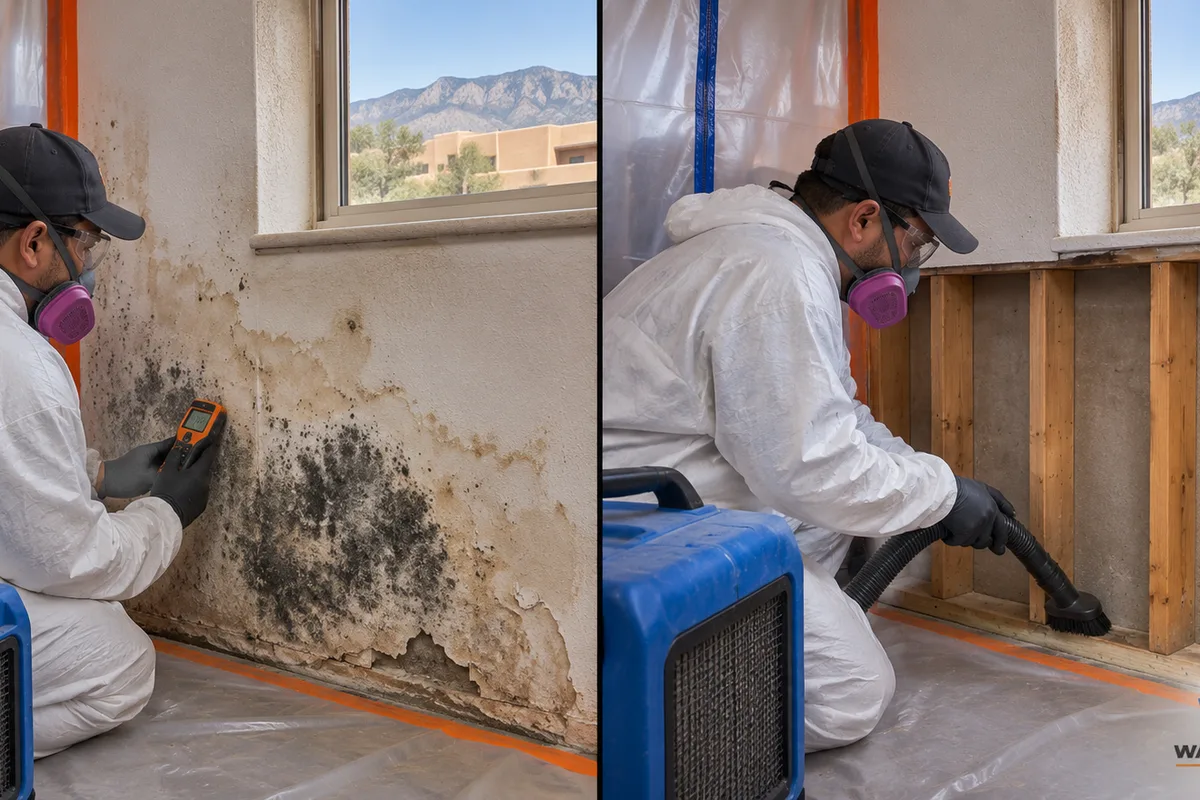
A useful proposal identifies the affected rooms, removal boundaries, containment method, cleaning steps, drying needs, and restoration responsibilities. It should also explain assumptions. Mold behind cabinets or inside a wall may expand the scope once finishes are opened, so documentation matters.
Water Restoration Albuquerque separates observed facts from suspected hidden conditions and explains why each step is recommended. Photos and moisture readings can help property owners understand the work and keep records for a landlord, property manager, insurer, or future buyer. Insurance coverage varies by policy and by the cause of the moisture. The property owner should confirm coverage directly with the carrier before relying on reimbursement.
For commercial properties, scheduling and containment should account for occupied areas, customer access, inventory, and heating or cooling systems. Residential work requires the same care around bedrooms, kitchens, personal belongings, and pets. In either setting, the scope should fit the actual conditions rather than applying the same treatment to every stain.
Professional mold removal in Albuquerque typically costs about $500 to $2,500 for a limited, accessible area, while projects involving several rooms, wall cavities, or extensive material removal may range from $3,000 to $10,000 or more. These are general estimates, not quotes.
Price depends on the affected square footage, containment needs, material disposal, access, drying time, and whether reconstruction or independent testing is included. Hidden growth discovered after opening a wall can change the scope. The exact cost is confirmed after an on-site inspection.
If moisture or musty odors keep returning, arrange an inspection before more building material is affected. You will receive a practical scope based on what is found.
Call for Emergency HelpScheduling depends on the size of the affected area, whether the moisture source is active, and the containment required. An inspection should come first so the crew can identify wet materials and prepare the correct equipment. If a plumbing or roof repair is needed, stopping that water source may take priority before removal begins.
A limited project may take a few working days, while extensive removal, structural drying, and reconstruction can take longer. Drying time depends on material type, moisture levels, airflow, and conditions inside the building. Albuquerque's low outdoor humidity can help some drying work, but concealed cavities still require measured verification rather than assumptions.
Testing is not always required when visible growth and a clear moisture source already establish the need for remediation. Testing may be useful when the source is uncertain, documentation is required, occupants have specific concerns, or independent clearance is requested. When sampling is appropriate, using an independent environmental professional keeps assessment and remediation roles separate.
You may be able to remain in an unaffected part of the home during a limited, well-contained project. The decision depends on the location and extent of work, HVAC connections, access routes, and the needs of children, older adults, pets, or medically sensitive occupants. The work plan should state which areas must remain vacant.
Mold can return if the moisture problem is not corrected or materials become wet again. Successful work combines source correction, removal or cleaning of affected materials, controlled drying, and follow-up moisture checks. Evaporative cooling, plumbing connections, roof penetrations, and indoor condensation are among the conditions worth reviewing in Albuquerque properties.
Coverage depends on the policy and the event that caused the moisture. A sudden covered water loss may be treated differently from long-term seepage, deferred maintenance, or recurring condensation. Document the conditions, protect the property from further damage when safe, and ask the insurer for a written coverage decision.
Color alone does not identify a mold species or determine the correct removal method. Dark growth can come from several organisms, and appearance cannot establish health risk. Treat visible growth as a moisture and building-material problem, avoid disturbing it, and seek medical advice for personal health questions.
Describe what you have seen, smelled, or recently repaired. Water Restoration Albuquerque will assess the affected area and outline the next practical steps for removal, drying, and restoration.